Which Massage Helps Back Pain? The Most Important Types Compared
Back pain is one of the most common health complaints in Germany — more than 70 percent of adults experience it at least once a year. Anyone looking for relief quickly discovers a bewildering variety of massage options: classic massage, trigger point, fascia, lymphatic drainage, connective tissue massage. Which method suits which pain? This guide gives you a practical overview and helps you make the right choice.
Diagnosis first, then therapy
Before we look at the individual massage types, an important note: not every back pain should simply be massaged away. Acute, very severe or radiating pain should always be evaluated by a doctor first. A massage is a supportive, often very effective therapy — but it does not replace a medical diagnosis.
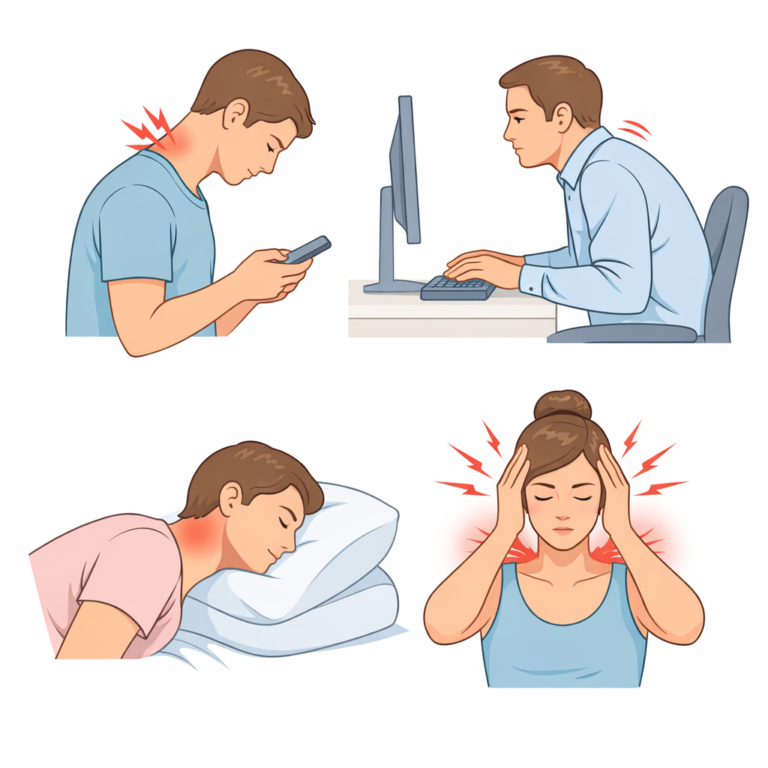
Acute back pain appears suddenly and lasts less than six weeks. Common causes are muscular overload, lifting injuries or acute tension. Gentle massage techniques combined with heat are often very helpful here.
Chronic back pain persists for more than twelve weeks. It is often complex and has multiple triggers at the same time — muscular, fascial, joint-related and psychosocial. This calls for a long-term treatment plan with different massage approaches.
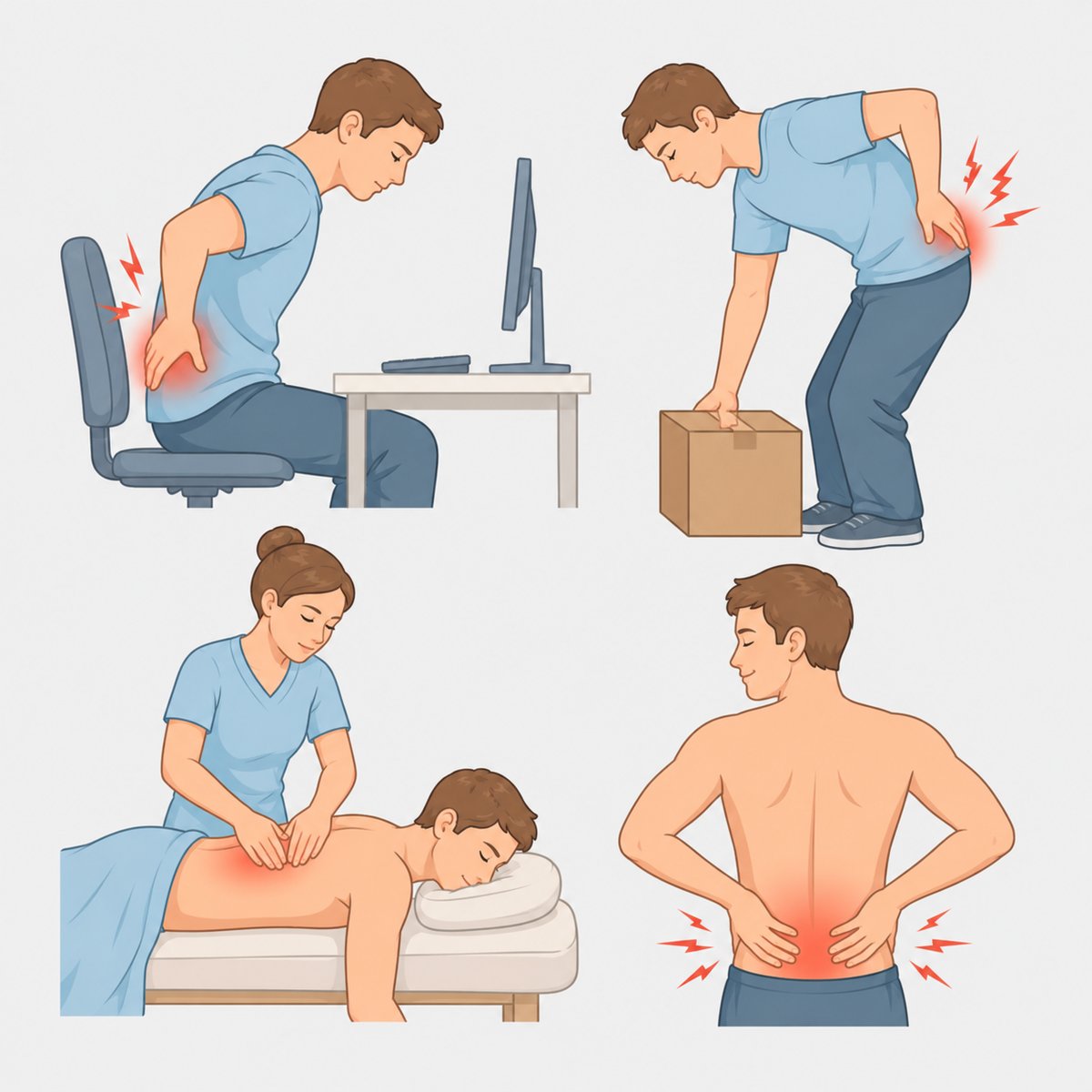
Classic massage — the trusted all-rounder
Classic massage is the most familiar form and the first contact with professional massage for most people. It works with five basic strokes: effleurage, petrissage, friction, tapotement and vibration. A session for the back usually lasts 30 to 45 minutes.
Particularly suitable for: general muscle tension, stress-related neck and shoulder complaints, mild to moderate back pain, relaxation and recovery after physically demanding work.
How it works: Classic massage increases blood flow, releases muscular tension, supports lymphatic drainage and relaxes the autonomic nervous system. After a session, many people feel relaxed, more mobile and in better spirits — and the effect often lasts for several days.
Frequency: For acute complaints one to two appointments per week, for chronic tension one weekly treatment over several weeks, then maintenance therapy every two to four weeks.
Trigger point therapy — targeted relief for local pain
When back pain can be pinpointed precisely — for example as a burning, pressing spot between the shoulder blades or a pulling pain in the lower back — trigger points are often the cause. These are hardened muscle fibre bundles that not only hurt locally but can also refer pain to other body regions.
Particularly suitable for: localised pain, radiating complaints (shoulder to arm, lumbar to gluteal), chronic tension that doesn’t respond to classic massage alone, headaches that originate from the neck.
How it works: The therapist palpates the trigger points precisely and applies targeted, well-dosed pressure on the point. This stimulation increases blood flow, the muscle fibres relax and the radiating pain often eases during the treatment itself.
A note on intensity: Trigger point therapy can be intense but never unbearably painful. A well-trained therapist finds the right pressure for each patient individually.
Connective tissue massage — when fascia is stuck
Beneath the skin and around the muscles runs a complex network of fascia — thin connective tissue sheaths that envelop all structures. When these fascia become stuck or immobile, diffuse, hard-to-locate back pain often results. This is exactly where connective tissue massage comes in.
Particularly suitable for: diffuse, hard-to-locate back pain, restricted mobility after long sitting, tension that returns despite classic massage, complaints from fascia adhesions after old injuries.
How it works: With targeted pulling and sliding movements, the layers of connective tissue are moved against each other. Adhesions release, mobility improves. The treatment can feel unfamiliarly hot at first — many patients describe the sensation as “sharp but pleasant”.
Lymphatic drainage — for swelling and inflammation
Few people think of lymphatic drainage when they think of back pain. In fact, for certain conditions it can be exactly the right choice.
Particularly suitable for: back pain after surgery on the back or spinal canal, complaints with lymphatic drainage disorders, swollen disc herniations during rehabilitation, post-operative oedema.
How it works: Very gentle, circular movements activate lymphatic flow. Accumulated fluid is transported away, the tissue is relieved, pressure on nerves and structures is reduced. The treatment is gentle, almost meditative — not a hard massage.
Fango as a warm companion
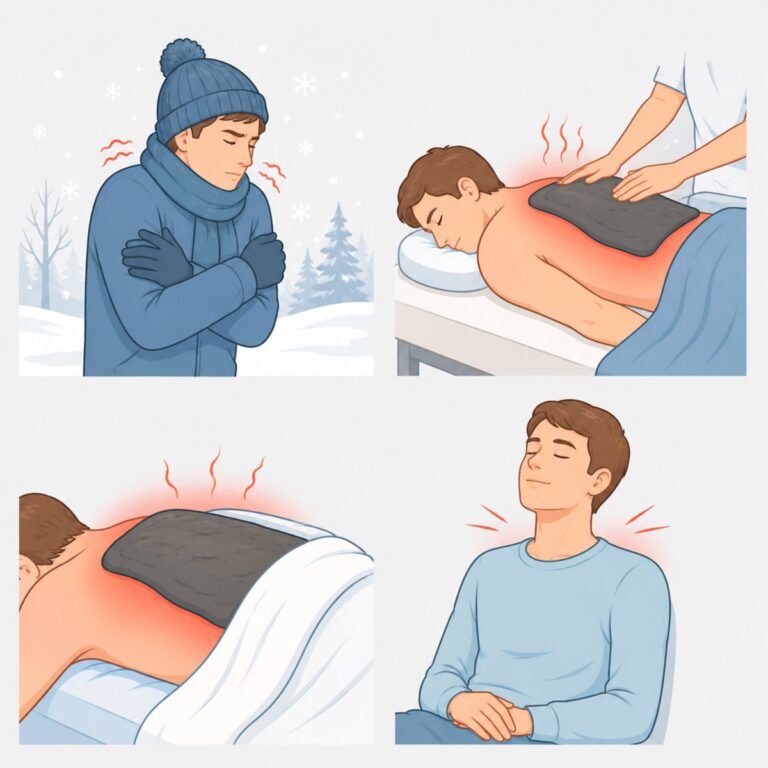
Strictly speaking, fango packs are not a massage, but they belong to the standard toolkit for treating back pain. Deep heat from the mineral healing mud penetrates 2 to 3 centimetres into the tissue and deeply relaxes the muscles.
Particularly suitable for: chronic back pain without acute inflammation, osteoarthritis in the spinal area, cold-related tension in winter, as preparation for an intensive massage.
How it works: Heat widens blood vessels, relaxes the muscles and makes tissue more receptive to subsequent manual techniques. Fango is often applied directly before a classic or trigger point massage.
Which massage for which back pain? A practical overview
This overview helps with initial orientation. The final therapy recommendation comes from a personal consultation and examination:
- General tension, stress: classic massage, optionally with fango
- Local, point-like pain: trigger point therapy
- Radiating pain neck to arm: trigger point + classic massage
- Stiff lower back after long sitting: connective tissue massage + fango
- Chronic back pain without clear localisation: combination of classic massage, trigger point and connective tissue
- Pain after disc surgery: lymphatic drainage, later supplemented by classic massage
- Weather sensitivity, feeling cold, winter tension: fango as a regular application
- Recurring pain despite many massages: connective tissue massage and fascia therapy
When to see a doctor instead of a masseur
There are clear warning signs where medical evaluation is necessary before any massage:
- Back pain with fever or chills
- Sudden, very severe pain with no clear cause
- Radiating pain into the leg or arm with numbness
- Paralysis, weakness or gait disturbances
- Problems with bladder or bowel control
- Pain after a fall or accident
- Unintentional weight loss combined with back pain
In all these cases, a doctor’s visit is essential — a massage may only take place after medical clearance.
Personal consultation instead of a standard package
The right massage for back pain cannot be picked from a catalogue. It comes from the individual symptoms, medical history, physical constitution and treatment goals. An experienced therapist takes time for a thorough consultation, examines the back carefully and develops a tailored treatment plan.
In our mobile practice we treat people with back pain every day — from acute tension to complex chronic patterns. We come to you across the entire Allgäu: Immenstadt, Sonthofen, Oberstdorf, Burgberg, Bühl am Alpsee and surroundings.
Book a consultation for your personal back-pain therapy: phone +49 176 931 47 313. Mobile service throughout the Allgäu — we come to you, advise personally and find the right treatment for your back pain together.